
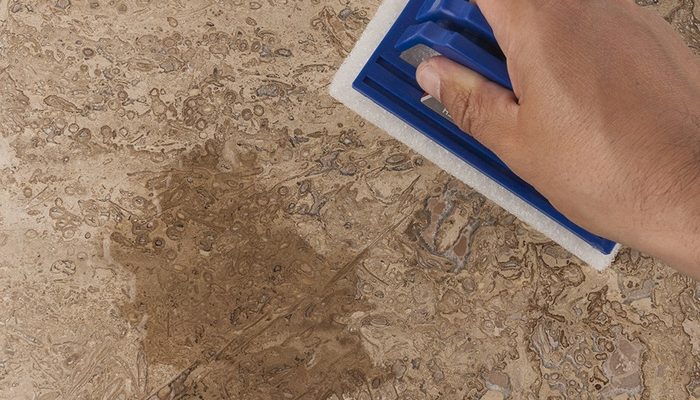
Using the right cleaning products is crucial. Whether you clean it yourself or hire a professional, be sure to use a cleaner specifically designed for natural stone.
For granite, slate, or unpolished sandstone, you can use acidic solutions, but limestone (marble, travertine, natural limestone) is very sensitive to acids.
Vinegar is acidic and will react with the calcium carbonate in limestone, causing the surface to permanently lose its shine.
Bleach is also unsuitable for gentle cleaning and can even damage the stone. Chemically damaged surfaces can only be repaired by mechanical methods.
For acid-resistant stone, vinegar can damage the sealant on its surface, requiring more frequent resealing.
2. Remove scratches with abrasive tools
Attempts to remove scratches and some stains, often corrosive, by rubbing with abrasive tools, aggravate the problems rather than solve them. Especially when you make an effort to scrub.
According to their durability on the Mohs scale, travertine and marble are easier to scratch than granite, for example, this information is still useful during the assembly process but also afterwards, when you have to install furniture or transport heavy objects on the surface. If you can use a soft microfiber cloth for daily maintenance, to remove scratches and stains, I recommend calling a professional to sand and possibly polish the surface, as appropriate.
3. Allow the dust to settle on the surface
Dust particles and small grains of sand brought from the outside onto the soles of shoes are not visible, but they exist and affect natural stone surfaces. The most common effect is wear which causes loss of shine. The resulting dull and boring appearance undermines one of the main characteristics of natural stone cladding: personality. Loss of shine is also responsible for the dirty appearance of an otherwise clean floor. Constant maintenance of the surface, using a vacuum cleaner and mop, at least twice a week, to which is added weekly washing with a neutral detergent, will protect and maintain the beauty of the environment.
4. Don’t protect high-traffic areas
You’ve seen what happens if you let dust settle on stone surfaces. In public spaces, as well as private ones, with intense traffic, contamination from dust and sand is much more serious. In these areas the appearance deteriorates rapidly, the shine disappears and you will have a mixture of finishes on the surface, sometimes shiny, sometimes matte, without any shine. It goes without saying that placing a carpet in the passage areas will protect the surface. Dust barriers are placed in the corridors, at the entrance, in the offices and in the kitchens, ideal for protecting the stone.

5. It is not waterproof stone regularly
Stains on natural stone surfaces must be removed immediately. Afterward, protecting the surface to prevent further damage is crucial. This protection is typically achieved through impregnation, but its effects are not permanent. Regular protection is required depending on the stone type, surface treatment, environment, climate, and installation. Sometimes it needs to be done every three years, sometimes only every few months.
For professional installation, I recommend consulting an expert. If you wish to do it yourself, be sure to carefully study the correct installation process. Careful maintenance of your natural stone surface will keep it looking new for years to come. Contact PIATRAONLINE experts for the best stone care solutions to keep your stone looking new. Feel free to share your opinions—your suggestions are helpful to others. There are currently no comments or questions about this article.
Conclusion
Cleaning and maintaining natural stone surfaces requires extra care and the use of suitable cleaning products. Natural stone is renowned for its durability and timeless beauty, but its composition varies, and so do its reactions to cleaning agents. Using unsuitable cleaning agents can cause permanent damage, affecting the appearance and lifespan of the stone surface. Therefore, choosing a cleaning agent specifically developed for natural stone is not only a recommendation but also essential for maintaining its quality.
Different types of stone also react differently to cleaning agents. Harder stones, such as granite, slate, or unpolished sandstone, are generally more resistant to corrosion and can tolerate some acidic cleaning agents if used properly. However, stones containing calcium carbonate, such as marble, travertine, and natural limestone, are particularly sensitive to acids. Even common household products that many consider safe can cause serious damage when used on these materials.
Vinegar, for example, is widely used as a natural cleaner, but it is acidic and reacts with the calcium carbonate present in limestone-based stones. This reaction can lead to dull spots, etching, and a loss of the stone’s natural shine. Unfortunately, this type of damage is not superficial and cannot simply be wiped away or polished lightly. The chemical reaction alters the surface itself, leaving marks that permanently change its appearance.
Bleach can also be problematic for natural stone surfaces. While it may seem effective for disinfection or stain removal, it can discolor the stone or even weaken its structure over time. In some cases, strong chemicals may “burn” the surface, leaving visible marks and reducing the aesthetic value of the material. These risks highlight the importance of using products specifically formulated for stone care.
When a natural stone surface is chemically damaged, the restoration process becomes far more complex. Unlike regular dirt or stains, chemical damage often requires mechanical treatment, such as grinding or professional polishing, to restore the original finish. This process can be time-consuming and costly, making prevention the most effective strategy.
Ultimately, proper care is essential to maintain the beauty and durability of natural stone. By using appropriate cleaners and understanding the specific needs of each type of stone, homeowners and professionals can protect these surfaces for many years. Careful maintenance ensures that natural stone continues to display its elegance, strength, and natural character without unnecessary damage.
latest posts published
Elegance and versatility for your table
Plant shelf: transform your interior!

creative tips for your stay

Comfort and style at home

mix styles and dishes!

Transform your interiors with elegant pastel colors

Give a unique Boncoeurs gift

Olfactory elegance: reinvent your interiors

Brighten up your windowless space: effective tips