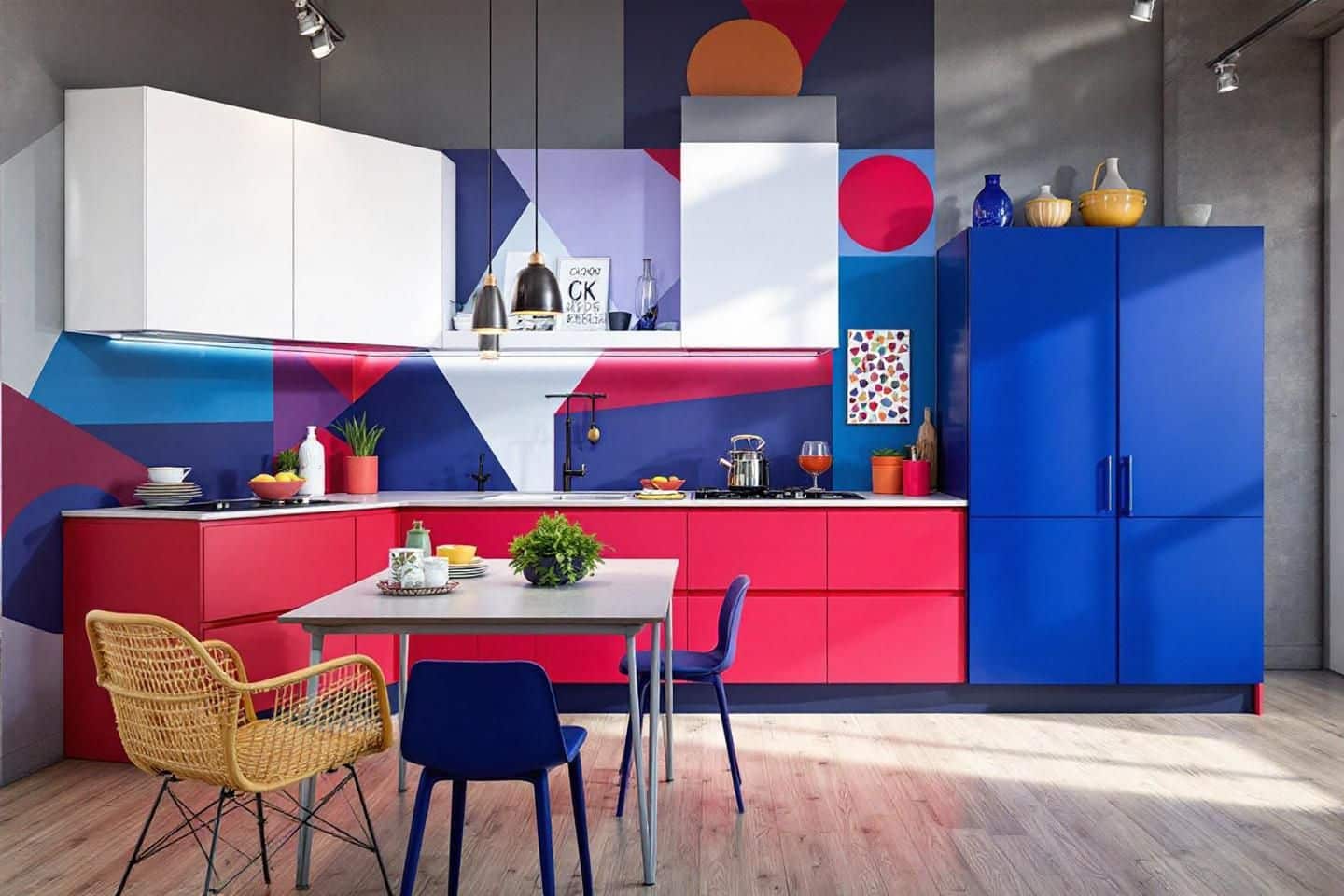

How can one live generously on a minimal amount of land? We show how you can build a house even on a small plot of land with smart planning. And save money at the same time.
CHECK CONSTRUCABILITY BEFORE PURCHASING

Small or complicated properties can turn out to be a steal because they are less desirable. But be careful. As with any property, before purchasing it is necessary to check which construction measures can actually be implemented on the property. Find out about the distancing rules required by the state building code. Especially on small plots of land this can lead to restrictions, for example on the maximum possible surface area of the house to be built.
Further information such as the windows to be respected, the maximum height of the building and the number of floors or the shape and inclination of the roof can be found in the building plan of the property. Before buying, check whether this frame fits your ideas for your future dream home or whether you can live with the restrictions that come with it.
BUILD WITH CELLAR ON SMALL LAND
On small plots it is absolutely advisable to build a house with a basement. In the average single-family home, a full basement provides up to 40% more living/usable space than the same home with a simple attic. This plus space can be used as additional living space for a hobby room, private gym, study or granny flat. But in the basement there is also space for the building’s services, the laundry and/or the storage room for supplies. This leaves more room for living above ground.
Furthermore, the house with a basement, assuming non-critical soil conditions, has only about 10% higher construction costs and up to 40% more living and usable space than the same house with an attic.
FLEXIBLE SMALL ROOM DESIGN
The more difficult the initial situation, the less effective the standard solutions are. That’s why you should tackle the construction of a house on a small plot of land together with an experienced planning expert such as one of the construction partners. It can design completely individually and adapted to each property.
Formally, on a small plot of land, simple architecture without large nooks and crannies and bay windows is preferable. Especially in a not so large building, a clear design language can set special accents.
When determining the living space, it is necessary to carry out realistic planning of needs, guided by real needs and not just ideals. Do you really need a guest bathroom or a second bathroom with a shower? Do you absolutely need a separate home office? Reductions in the space program expand the remaining rooms.
The number of people present (or present) in the household also plays a role. The solution could be expansion reserves under the roof or in the basement or rooms that can be used flexibly, for example as a children’s room or study. Otherwise, designing the floor plan means dividing the rooms efficiently and making the most of the available space. For example, circulation areas of the house such as corridors, stairs or passageways should be as small as possible.
BRIGHT AND OPEN HOME PLANNING
The fewer walls there are, the more spacious the living space appears. So it’s best to combine the living, eating and kitchen into one large room in the center of the house.
The corridors and staircases of a single-family house do not necessarily require spatial separation. The open staircase in the living room becomes a real eye-catcher and saves space.
With a higher knee-high floor and steeper roof slope, you gain standing room and height in the attic. Skylights and floor-to-ceiling windows provide additional brightness. An attic appears more spacious if the room remains open to the top. However, the attic floor was then lost as a possible storage room.
BEWARE OF YOUR NEIGHBORS
If you are approaching your future neighbors because of the small property, you should also pay attention to the placement of windows and doors, terraces and balconies when planning. Floor-to-ceiling windows and doors, which ensure light-flooded rooms and a feeling of greater space, should be positioned on the facade so that they do not feel as if they are on display in front of the neighbours.
The same goes for terraces and balconies. The closer the neighboring buildings are, the more carefully you should choose the location of your outdoor areas. Even if this means that the terrace is not directly connected to the living/dining room or is not optimally oriented to the south.
The bottom line is that there is a lot to consider if you want to build a house on a small lot. Your nearest construction partner will be happy to advise you on individual planning and implementation.
latest posts published
Elegance and versatility for your table

Plant shelf: transform your interior!
creative tips for your stay
Comfort and style at home
mix styles and dishes!
Transform your interiors with elegant pastel colors

Give a unique Boncoeurs gift

Olfactory elegance: reinvent your interiors

Brighten up your windowless space: effective tips