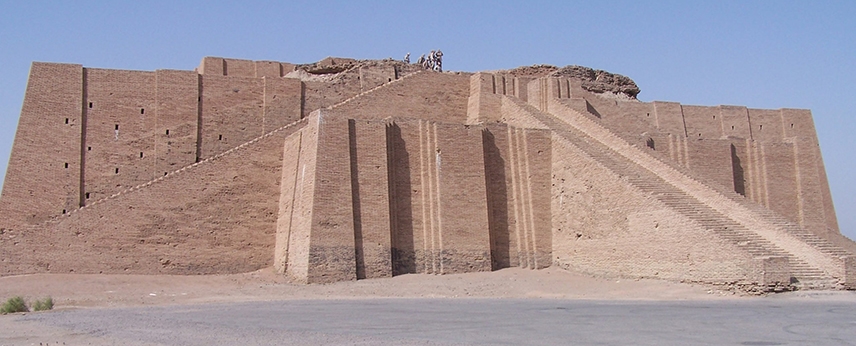
In the long history of house construction, the Sumerian civilization occupies a pivotal position. Proud and confident, they laid the foundations, built houses, developed various institutions, and dared to innovate. All this is thanks to the ancient rulers of the time, whose names have immortalized the term «Nam-Lugal» (royalty, dynasty) and provided us with a concrete perspective on human life thousands of years before Christ. Under the leadership of these «Lugals,» the civilization between the Tigris and Euphrates rivers flourished—though its vitality and pace were not as great as today’s, the achievements of the Sumerian civilization are comparable to those of Egypt or the Minoan civilization.
Did you know?
The Sumerians, also known as the Mesopotamians, are one of the oldest peoples of humankind.
They lived in the region between the Tigris and Euphrates rivers.
The first inhabitants of Mesopotamia were the Sumerians.
Regarding construction methods, there is evidence that the Sumerians began building houses as early as 5,000 years ago. And these were not haphazard constructions, but rather projects based on detailed plans. In this process, they accumulated a wealth of experience, which helped them and their descendants eventually build the seven-story pyramidal towers—true wonders of the ancient world, such as the Tower of Ur, the Tower of Choghazanbil, and the Tower of Siarq. However, achieving this feat was arduous, requiring the processing of clay, crucial in a region where timber was scarce. Therefore, Sumerian houses were based on ancient bricks made from a mixture of clay, mud, sand, and water. These bricks, known as early as 9000 BC, were first sun-dried and then fired around 4000 BC to improve their durability and lifespan. In actual construction, they primarily used natural stone and reeds, with less use of timber. Houses were rectangular or circular, typically divided into three rooms. While timber was scarce in Sumer, reeds were abundant in the marshes and widely used for building reed houses. Reeds were bundled into mats and woven into mats. These mats were inserted vertically into the ground like pillars, arranged in two parallel rows, and then tied together at the top. Early simple houses consisted only of bundles of reeds stuck into the ground, but as houses were built on natural stone foundations, the structures became more complex. Where possible, people used wood, wire, and local adhesives (clay).
However, mud bricks (later clay bricks) and chopped straw were the most important building materials.
This mixture was pressed into molds and then dried in the sun. The bricks were then bonded to the walls with dried clay plaster. During the Ubaid period, clay plaster was replaced by clay, which was pressed between the bricks to bind them together, forming dense bricks that constituted the walls. Later, scenes of Sumerian life were painted on the walls.
The roofs were made of palm planks covered with reeds. The rooftops were connected to the house by brick or wooden staircases. «Lugal» houses, representing the luxury class, were built of fired bricks and, while very practical, were extremely expensive, beyond the reach of most. Doors and door frames were made of wood, sometimes even cowhide. Because the doors were small, Sumerians had to stoop to enter or exit. Houses typically lacked windows; even when they did, they were constructed of clay and wooden latticework. This rudimentary construction method resulted in poor building conditions and frequent repairs.
Social class also influenced house construction.
The Sumerians were divided into three social classes. The upper class consisted of the wealthiest and most influential people (kings, priests, government officials). The middle class comprised artisans (skilled workers producing metalwork, weapons, pottery, or textiles), farmers, fishermen, and merchants who frequently traveled to nearby centers to trade for food and tools. The lower class consisted of captured slaves bought and sold by the upper class. They worked in temples and on farms.
House construction reflected this social class system. Ordinary houses were small, single-story mud-brick buildings with several rooms surrounding a courtyard. Wealthy families lived in two-story houses, whitewashed, with ten or even twelve rooms and wooden doors, despite the scarcity of wood in Sumerian cities. Most houses (around 90 square meters) had a square central room around which other rooms were arranged. To ensure light and ventilation, lighting inside the houses relied primarily on sesame oil lamps.
The ground floor of a two-story house typically included a living room, kitchen, bathroom, and servants’ quarters.
A hearth located in the courtyard or a separate room was an important part of the house.
Windows (mainly found in more expensive houses) were very small and high up. The use of mud bricks, reeds, and natural stone in the construction of houses fulfilled a key requirement of Sumerian housing: effective insulation from external heat. Basic Sumerian furniture included low tables, wooden-framed beds, and high-backed chairs. Those who could not afford beds slept on mats woven from straw or reeds. Jars, baskets, and chests were all made of reeds. Carpets laid on the walls and floors were very precious. Sometimes, family tombs (the burial places for the deceased) were located beneath the floor. There might also have been dedicated cemeteries outside the city. These houses suggest the construction of pyramids, magnificent structures symbolizing the pride of Sumerian-Arcadian and early Mesopotamian civilizations. Pyramids are stepped architectural complexes, also built from sun-dried mud bricks. Like the pyramids, pyramids hold mystical significance, with their apex being the most sacred. The earliest pyramids date back to between 3000 and 2200 BCE, while the latest were built around 500 BCE.
In his book *A Handbook of Ancient Mesopotamian Life*, Stephen Bertelman, Distinguished Professor of Classics at the University of Windsor, describes the Sumerian house-building method as follows:
«The builders dug a series of holes in the ground and placed a bundle of tall reeds in each hole. A circle of holes formed a circular house, and two parallel rows of holes formed a rectangular house. After the reed bundles were secured, opposing bundles were bent and tied together at the top to form a roof. A layer of reed mats was laid at the openings of the front or back doors (the openings of rectangular houses were at the ends, and those of circular houses were on the sides).»
In some regions, these ancient materials and techniques are still well-preserved. In the 20th century, Romanian farmers still used clay, horse manure, and straw to build permanent houses, many of which are over 100 years old and still inhabited. Professor Bertelman also mentions that remnants of these techniques can still be seen in areas where Sumerian building techniques still exist. Stefano Bertmann recalls:
“Today, the inhabitants of the swampy regions of southern Iraq still build and use these primitive dwellings. In Iraq’s hot climate, a well-constructed house must protect its inhabitants from the intense sunlight. Reed houses perfectly fulfill this need, providing shade. Furthermore, the dense bundles of reeds also offer some insulation. Regardless of wealth or status, everyone retains a cherished tradition: communal dining. This tradition continues to this day.”
Natural stone is also indispensable. Thanks to the abundant marble and limestone deposits nearby, the Sumerians were able to utilize this durable building material, and the foundations of some houses and buildings constructed with natural stone still stand today. More than five thousand years later, the remains and plans of houses from one of the most civilized ancient civilizations still bear witness to their resilience and craftsmanship.
Write a few words—your suggestions can be helpful to others. No one has commented or asked a question about this article yet.
latest posts published
Elegance and versatility for your table
Plant shelf: transform your interior!
creative tips for your stay
Comfort and style at home
mix styles and dishes!
Transform your interiors with elegant pastel colors
Give a unique Boncoeurs gift

Olfactory elegance: reinvent your interiors
Brighten up your windowless space: effective tips