The dream of owning your own home comes true for many people every year. For most people, this is the largest investment they will ever make in their lifetime. For this reason it is important that future builders know in advance what costs they will have to bear for the construction of the house and what adjustments they can make. Find out more below:
CORRECTLY CALCULATE THE HOUSE CONSTRUCTION COSTS
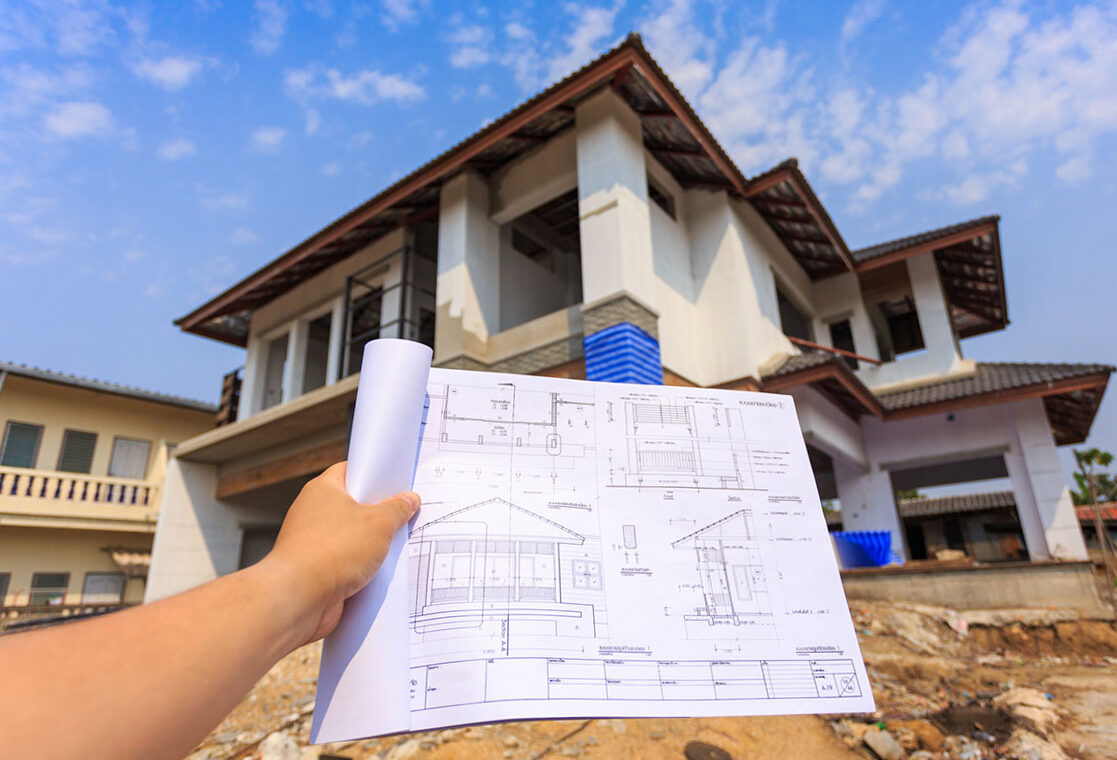
It is difficult to give a general opinion on the costs of building houses because countless factors influence the price of houses. The costs simply depend on where you build your home. Is it a location close to the city or is the property more in the countryside? In any case, in addition to the size of the house, the type of house also plays an important role. For example, linear homes cost less than homes with many nooks and additions. The prices of solid houses are generally lower than the prices of wooden houses with the same equipment (source: LCEE Consulting, Darmstadt). The planned equipment, in turn, has a great influence on the construction costs of the house and also offers savings potential.
That’s why it’s important to have a general overview of the costs you can expect when building a house right from the start of your home building project. Your nearest construction partner will be happy to help you put together your personal budget for house construction costs. This sophisticated budget gives you security during the construction period, facilitates financing and helps you keep total costs under control at all times.
PROPERTY COSTS
In 2020, the national average price of land ready for construction was 199 euros per square meter (source: destatis.de). However, prices vary greatly depending on the region and location of the property and therefore affect the house construction costs differently. Basically, the closer you build to a major city, the more expensive the property will be. But even within a city, real estate prices vary depending on the popularity of a neighborhood or existing or non-existent infrastructure. Properties in mixed areas cost less than in purely residential areas. You can get an idea of the price per square meter in the desired area by looking at the land value map of your municipality or municipal administration or by looking at the current real estate offers on one of the major real estate portals.
When choosing a site, consider how well developed the property is and how easy or difficult it will be to reach the future construction site with heavy equipment. You may incur additional costs when you build your home later.
Also include the additional costs of purchasing the property in your home budget. These are the real estate transfer tax – from 3.5 to 6.5% depending on the federal state – and the notary and land registry fees of approximately 2%. If you buy a house and land together from a real estate developer, the property transfer tax also applies to the construction costs of the house and the notary and land registry costs increase accordingly. If you purchase the property through a broker, you will be charged an additional broker fee of up to 7.14% of the purchase price.
HOUSE TYPE COST
The rule of thumb for home construction costs is: the smaller and simpler the shape and design of the home, the lower the price of the home. An unusual house in the Bauhaus style costs more than a classic house with a gable roof. With this type of home, you get the best value per square foot of living space. In contrast, one-story bungalows are more expensive than two- or more-story houses with the same living space. Of course, special components such as bay windows, dormer windows, porches or even balconies also lead to additional costs for the construction of the house.
A house with a basement is obviously more expensive than one without. Depending on the size of the home, a basement can easily cost $60,000 or more. There you can easily create additional living space. In principle, the more expensive and smaller the property, the more useful a cellar is. Conversely, when land prices are low, it is cheaper to buy a larger plot of land for a larger house without a basement than to build a smaller house with a basement on a smaller lot.
You can find a selection of different house types in the price examples on our homepage. If you click on a house type and then on a specific pre-engineered house, you can find out the regional price for this pre-engineered house with the specified equipment by entering the license plate number of your neighborhood or city. For example, the townhouse costs 130 m² based on the –Description of the building as a low-energy building with air/water heat pump including attic in Kassel €355,151 or the classic 135 m² house including attic in Fürth €356,053. Find your favorite type of house and, if it is in the catchment area of a construction partner, enter your vehicle registration number to find out the regional price of this house.
COST OF CONSTRUCTION MATERIALS
In essence: the prices of solid houses are cheaper than the prices of wooden houses with the same equipment (source: LCEE Consulting, Darmstadt). For the facade you can choose between plaster and clinker bricks. Apart from the fact that in some regions clinker bricks have a great tradition, a plastered external facade is significantly cheaper than a clinker brick facade. On the other hand, clinker bricks are more weather-resistant and durable than plaster, which needs to be repainted after a maximum of 20 years.
In general, high-quality building materials help to avoid subsequent costs. Not all seemingly economical solutions are also economical in the long term. What is the use, for example, of a cheap insulation material if it cannot ensure sufficient air circulation and a pleasant climate inside the house. Or there may be moisture damage and mold on the walls, which will later be more expensive to remove than using high-quality insulation material from the start. Therefore, when selecting materials, pay attention to high quality and long service life.
USE THE SAVING POTENTIAL
Who doesn’t dream of a house flooded with light with large windows on all sides? But every window and every door costs money. That’s why you save money when building a house if you choose fewer but larger windows and also limit the number of external doors. Align living rooms and bedrooms with large windows facing south and west, while designing pure bedrooms, bathrooms and utility rooms with smaller windows facing north or east. This saves on house construction costs and heating energy over a lifetime.
When choosing building technology you should not only consider the acquisition costs. Also think about subsequent costs and optimize overall costs by including public funding. It’s not just the federal government that promotes climate-friendly construction; states and municipalities also support new residential construction with various programs.
Healthcare equipment offers savings potential. If you settle for nice basic furnishings in bathrooms and toilets, you can save costs when building a house. Additionally, there are other ways to limit home construction costs when it comes to interior design. Of course, a parquet floor is beautiful, but do you notice the difference compared to a high-quality laminate? Do electric shutters have to be present everywhere or is the version with tape winder sufficient for some windows? On the other hand, it can make sense, for example, to equip the house with a Smart Home during construction with a small additional cost on the electrical system, so that it is future-proof right from the start. You only have to make a fraction of the home automation investment right away, but you know you’ll save money compared to a full upgrade later.
Prospective builders can also save money by doing their own work. Painting and flooring work are particularly suitable for this purpose. Likewise, outdoor areas can easily be designed by the builders themselves so as to save on house construction costs.
DON’T FORGET ADDITIONAL CONSTRUCTION COSTS
In addition to house and land costs, there are several additional construction costs when building a house, which many builders and some home suppliers tend to forget about. Therefore, when making offers on the house, check whether these costs are included in the price or are indicated as estimate items. TO With the offer from your regional construction partner you will receive a detailed list and estimate of all additional construction costs that are not included in the fixed price and which may be incurred.
Additional construction costs include costs for survey and building permits, if necessary static testing and costs for soil assessment. If there are old buildings on the property, demolition costs will be incurred, which can be quite significant. Otherwise the costs for the development of the property, including connection to the electricity and water network, sewerage system and Internet/telephone, are part of the additional construction costs, as are the costs for electricity and construction water. Especially in a house with a basement you must expect additional costs for the removal and disposal of excess excavated soil. Finally there are also additional construction costs for the necessary insurance coverage, not forgetting the costs for interest and repayment of the construction loan during the construction period.
latest posts published
Elegance and versatility for your table
Plant shelf: transform your interior!
creative tips for your stay
Comfort and style at home
mix styles and dishes!
Transform your interiors with elegant pastel colors

Give a unique Boncoeurs gift

Olfactory elegance: reinvent your interiors

Brighten up your windowless space: effective tips