
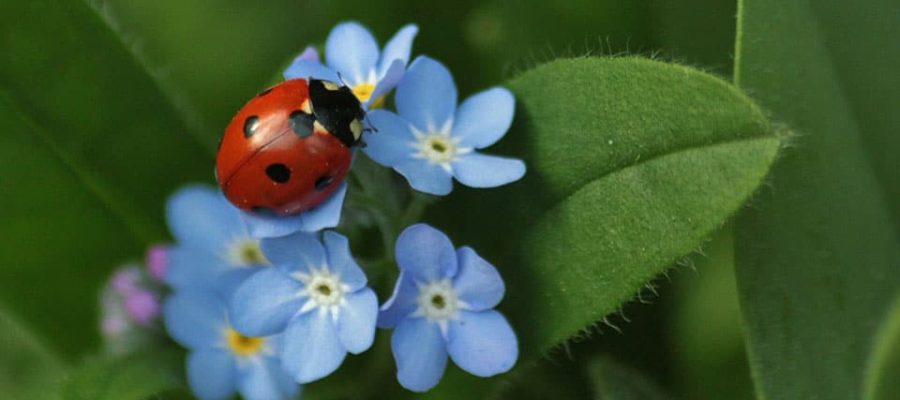
Forget-me-not is a plant that everyone seems to know. In several languages the name has the same meaning as, for example, “forget-me-not” in English. It is small, delicate and yet astonishing in its beauty. It is a symbol of young love, farewell and remembrance. Many people know this plant as a beautiful flowering plant in the garden or wild in the meadows. However, their use in the medicine cabinet appears to be less known.
Appearance and distribution
The forget-me-not (Myosotis) belongs to the forget-me-not family (Boraginaceae) which includes over 100 different species. It is widespread throughout almost all of Europe, Africa, Asia, North America and Australia. The plant is herbaceous and grows as an annual, biennial or perennial, depending on the species. The field forget-me-not, also used for medicinal purposes in naturopathy, is an annual plant, while the marsh forget-me-not is perennial. In good locations the plant can grow up to 30 cm tall. Depending on the species, the light green leaves are smooth or hairy and taper into a lanceolate shape. Some people also see the leaves as mouse-ear-shaped, probably due to the name Myosotis, which translated from Greek means «mouse-ear.»
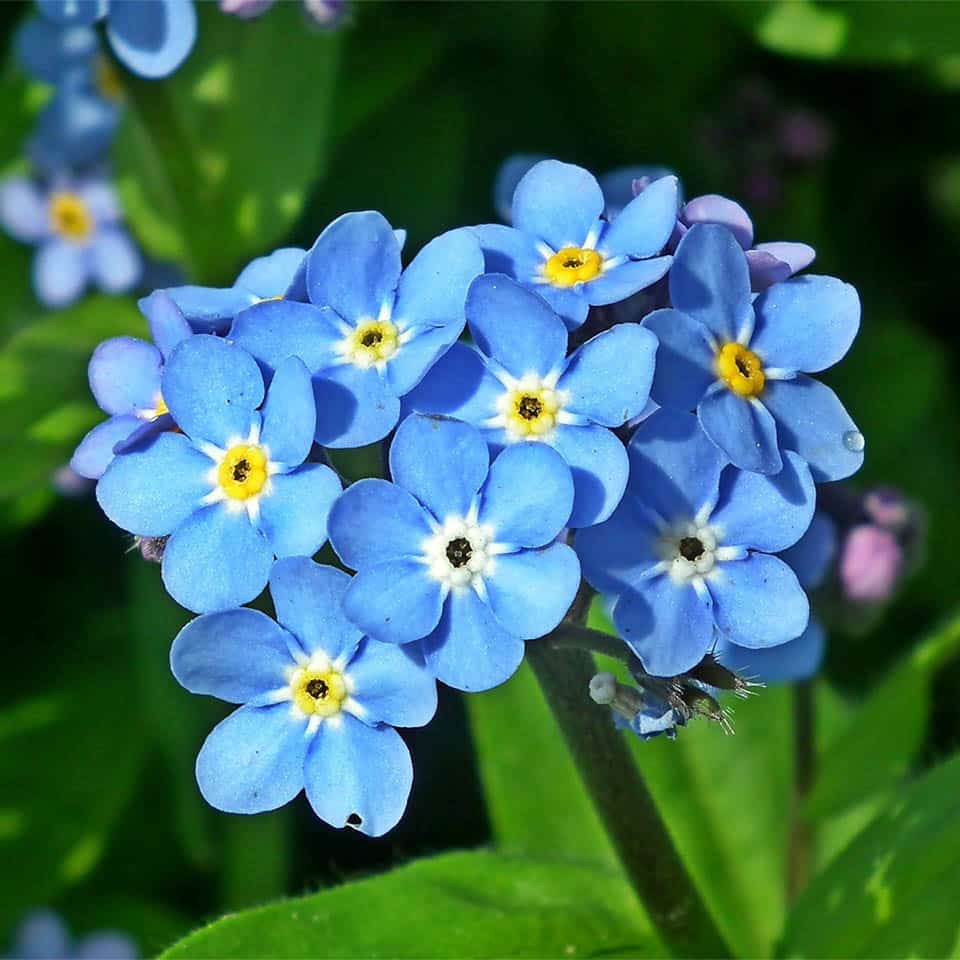
From April to September the forget-me-not blooms in a light to dark blue color. Sometimes blue can be so delicate that it turns into a white or pink shade. The flowers grow together in clusters, each with five petals and a white, usually yellowish center.
Use in the medicine cabinet
Surprisingly, despite its wide range of uses, forget-me-not is not particularly well represented in naturopathy. The main field of application of Forget-me-not is in inflammation of the skin, but also in inflammatory processes in other organs, such as the eyes and intestines. Because of the tannic acid and alkaloids it contains, forget-me-not is said to have astringent, anti-inflammatory, and calming properties. Forget-me-not should also be used for respiratory diseases and bronchitis.
The plant is mainly used in the form of herbal tea, tincture or homeopathic remedy (Myosotis arvensis). The tea should be used for diarrhea and for strengthening after illness. In homeopathy, Myosotis is used to treat predisposition to colds and swollen lymph nodes. Forget-me-not can also be used externally in case of skin inflammation and bruises in the form of compresses, tinctures and also as a bath additive.
Discover our online shop for wild herb enthusiasts
In our herbalist’s shop at www.die-moderne-Kräuterhexe.de you will find our books, magazines and our seasonal calendar. In our book “With wild herbs and medicinal plants all year round“(available here) talks about local wild herbs, medicinal plants and tips for healthy living. We want to preserve old knowledge and combine it with new discoveries. So we wrote down our experiences of the last few years and illustrated the wild herbs with our photographs. You can purchase the book in our Herbal Witches online store www.die-moderne-Kräuterhexe.de It is the ideal guide if you want to learn more about local wild plants and integrate medicinal plants into your daily life with simple advice. For each plant there are basic identification instructions and tips for use in the medicine cabinet and witch’s kitchen. The book is available exclusively in our Herbal Witches online store www.die-moderne-Kräuterhexe.de . We send each book personally and include a small greeting. You can look forward to it.
Is forget-me-not poisonous?
Every now and then you hear that forget-me-nots are poisonous. However, this depends entirely on the type you are talking about here. Marsh forget-me-not and broad-leaved forget-me-not are said to have a slightly higher content of pyrrolizidine alkaloids than, for example, field forget-me-not. At high doses, these alkaloids can cause liver damage or have carcinogenic potential. However, according to the EFSA (European Food Safety Authority), there is currently no information on a tolerable daily intake (TDI) value for pyrrolizidine alkaloids, as the data is too weak.[1] Hypotheses suggest that a small amount of forget-me-not consumption does not lead to any toxic harm, although exact quantities cannot be given. The rule probably applies here too: quantity makes poison.
Due to the pyrrolizidine alkaloids, Forget-me-not should only be used externally during pregnancy and on children. In general, forget-me-not is considered edible and is used in cooking for culinary purposes and the tea is also used in folk medicine. During the flowering period many insects enjoy the nectar and we also think that this plant is of underrated beauty.
latest posts published
Elegance and versatility for your table

Plant shelf: transform your interior!

creative tips for your stay

Comfort and style at home

mix styles and dishes!
Transform your interiors with elegant pastel colors

Give a unique Boncoeurs gift
Olfactory elegance: reinvent your interiors

Brighten up your windowless space: effective tips